
Trading with Giants: Canada’s quest for trade independence
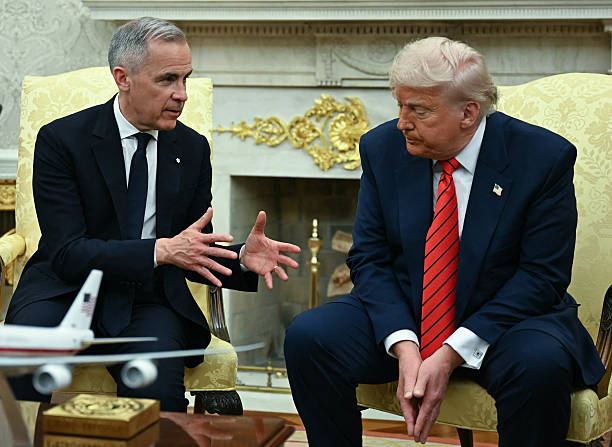
Carney and Trump meeting Oct. 7 in the Oval Office at the White House.
Tensions have persisted in the trade relationship between the United States and Canada under the current administrations, marked by the U.S. unilaterally imposing tariffs and corresponding Canadian retaliation. Upon taking office, President Trump declared a national emergency to impose tariffs of 25% on most Canadian imports-excluding oil and energy, which face a 10% levy - citing concerns over illicit drugs and the trade deficit. Crucially, while a U.S.-Mexico-Canada Agreement (USMCA) exemption was later granted for compliant goods, key sectors like steel, aluminum, and automotive have been specifically targeted with tariffs as high as 50%, creating significant market disruption. Washington’s sustained adoption of protectionist policies has put pressure on Canadian businesses and policymakers to operate in an environment of high volatility and uncertainty.
The strategy of Prime Minister Mark Carney has been balanced, comprised of measured retaliation against the U.S., showing resilience in the domestic economy, and diversification of trade. Following the first round of U.S. tariffs, Canada responded by implementing its own tariffs on American goods but later rescinded some measures to de-escalate tensions, retaining tariffs only on strategic materials like steel and aluminum. At the national level...